 PDFApostolova-Kuzova, Yankova T., Raycheva T., Stoyanov K. 2025.
Molecular identification of Ornithogalum species using DNA barcoding.
6th Balkan Conference of Biosciences, 30-31 Oct. 2025, Plovdiv, Bulgaria.
Abstract:
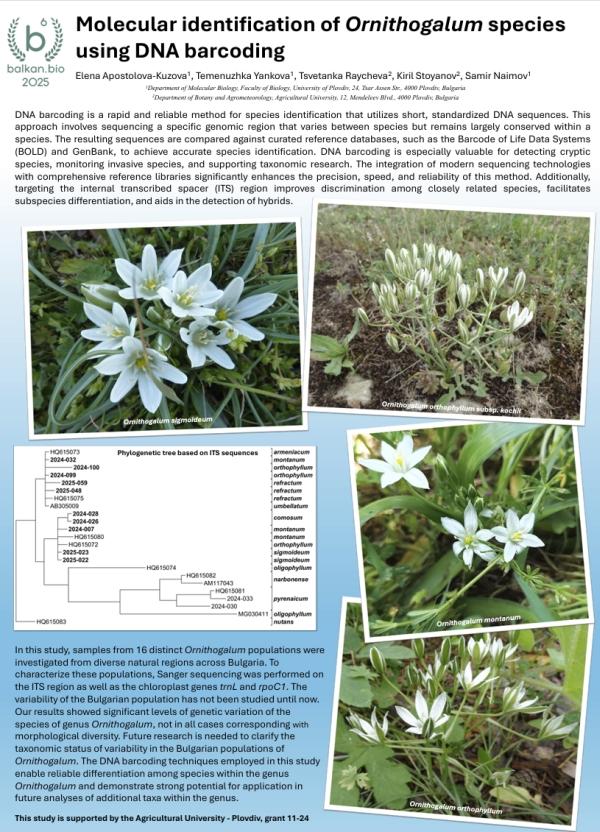
DNA barcoding is a rapid and reliable method for species identification that utilizes short, standardized DNA sequences. This approach involves sequencing a specific genomic region that varies between species but remains largely conserved within a species. The resulting sequences are compared against curated reference databases, such as the Barcode of Life Data Systems (BOLD) and GenBank, to achieve accurate species identification. DNA barcoding is especially valuable for detecting cryptic species, monitoring invasive species, and supporting taxonomic research. The integration of modern sequencing technologies with comprehensive reference libraries significantly enhances the precision, speed, and reliability of this method. Additionally, targeting the internal transcribed spacer (ITS) region improves discrimination among closely related species, facilitates subspecies differentiation, and aids in the detection of hybrids.
In this study, samples from 16 distinct Ornithogalum populations were investigated from diverse natural regions across Bulgaria. To characterize these populations, Sanger sequencing was performed on the ITS region as well as the chloroplast genes trnL and rpoC1. The variability of the Bulgarian population has not been studied until now. Our results showed significant levels of genetic variation of the species of genus Ornithogalum, not in all cases corresponding with morphological diversity. Future research is needed to clarify the taxonomic status of variability in the Bulgarian populations of Ornithogalum. The DNA barcoding techniques employed in this study enable reliable differentiation among species within the genus Ornithogalum and demonstrate strong potential for application in future analyses of additional taxa within the genus.
Acknowledgments: This study is supported by the Agricultural University – Plovdiv, grant 11-24